SEARCH
Architecture Spotlight: Decoding Singapore’s Marina Bay Sands
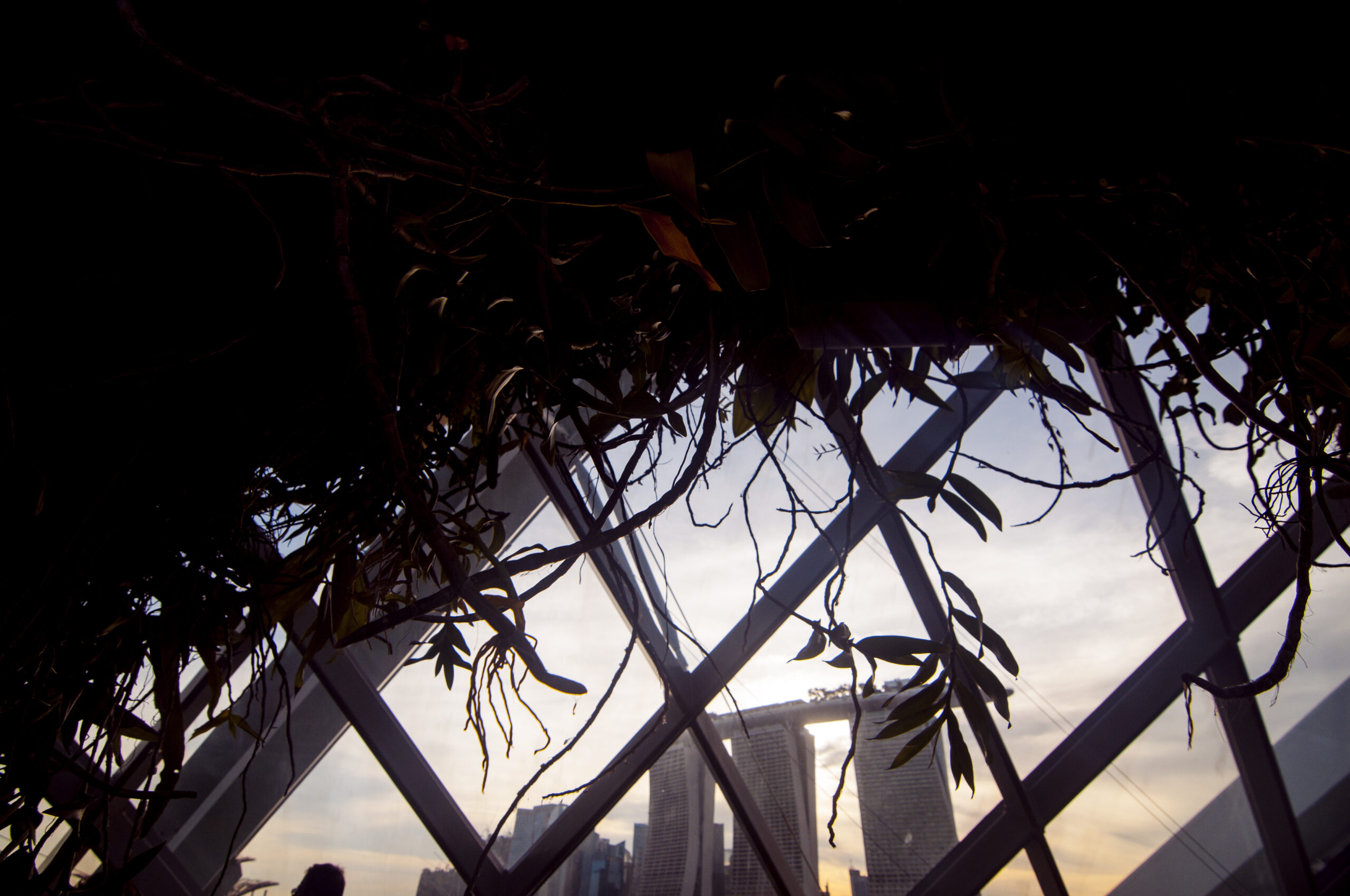
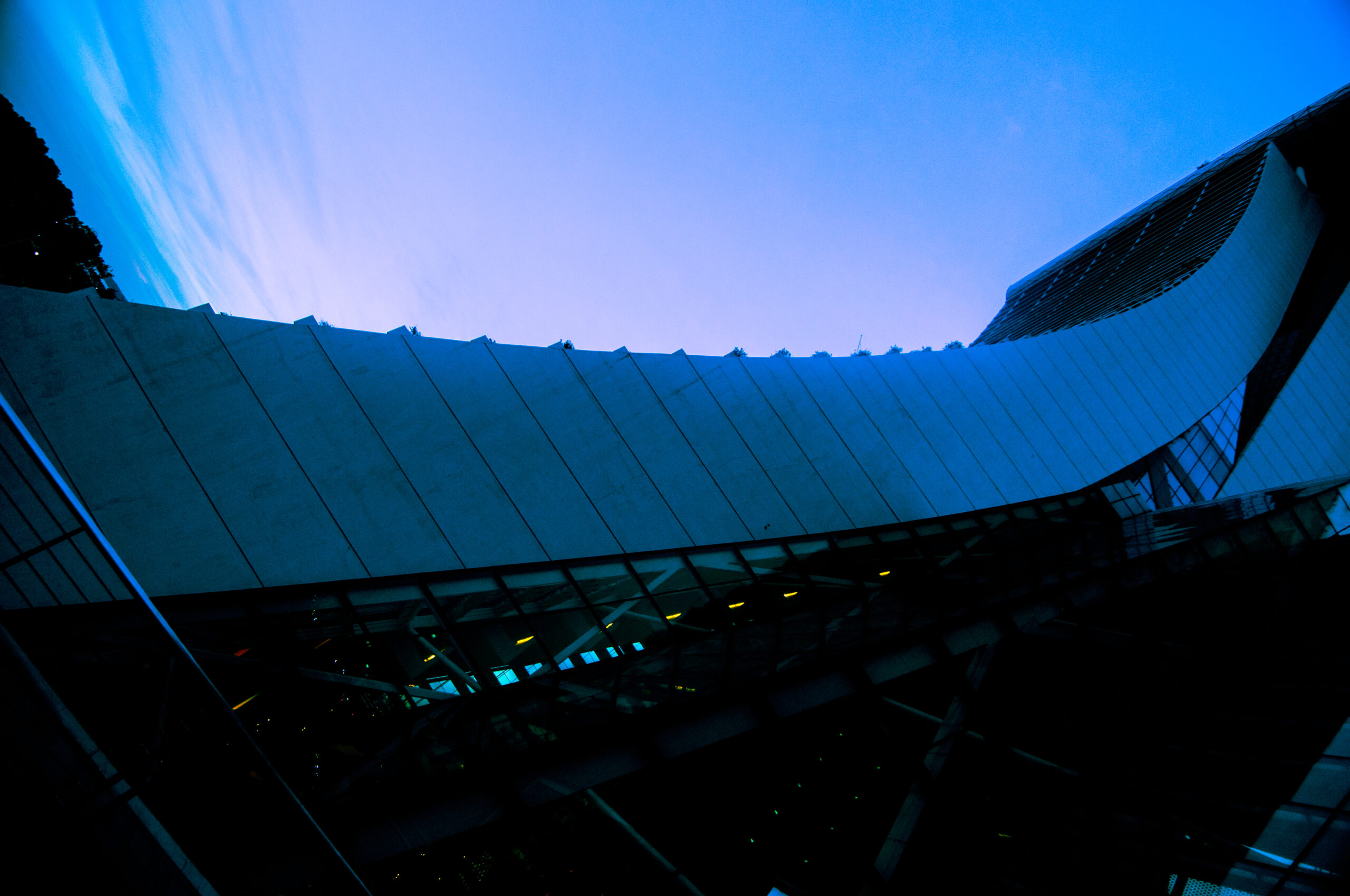
Few modern structures have redefined a city’s skyline as radically as Marina Bay Sands (MBS). Captured during the serene blue hour and glowing twilight of a mid-summer evening, these photographs showcase a masterclass in structural engineering, urban planning, and dramatic spatial design.
Let’s take an architectural journey through these frames to understand the brilliance behind one of the 21st century’s most iconic mega-structures.
The Visionary Architect: Moshe Safdie
To understand Marina Bay Sands, you have to understand its creator, the Israeli-Canadian architect Moshe Safdie. Famous for his early career breakthrough Habitat 67 in Montreal, Safdie’s design philosophy has always revolved around fractures of light, geometry, and integrating nature into urban high-rises.
With MBS, Safdie wanted to move away from the traditional, monolithic “glass box” skyscraper. Instead, he designed a sprawling urban district that functions like a microcosm of a city, utilizing historical references like ancient Roman cardos (main streets) to dictate the flow of people through the massive complex.
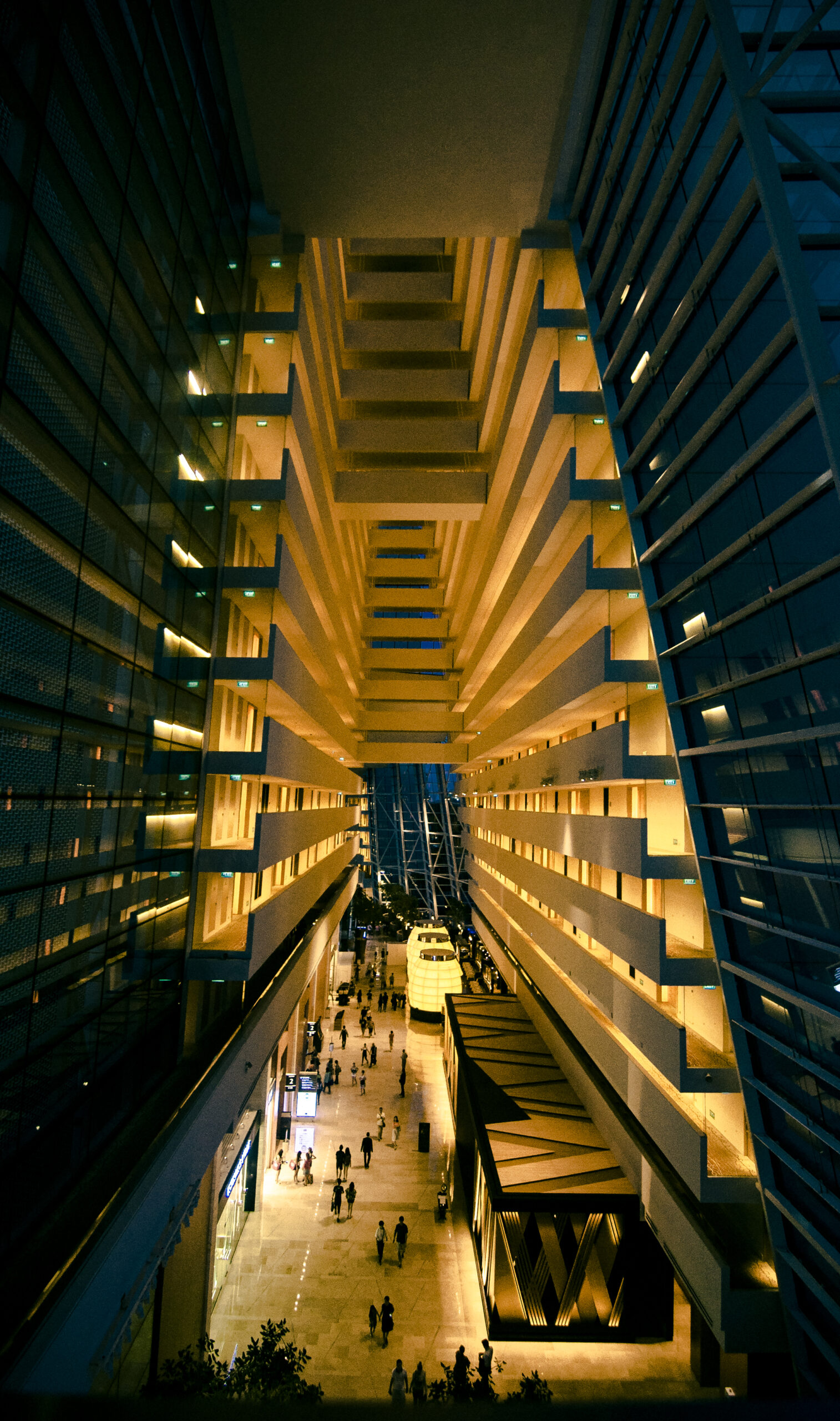
1. The Soaring Atrium and Cantilevered Terraces
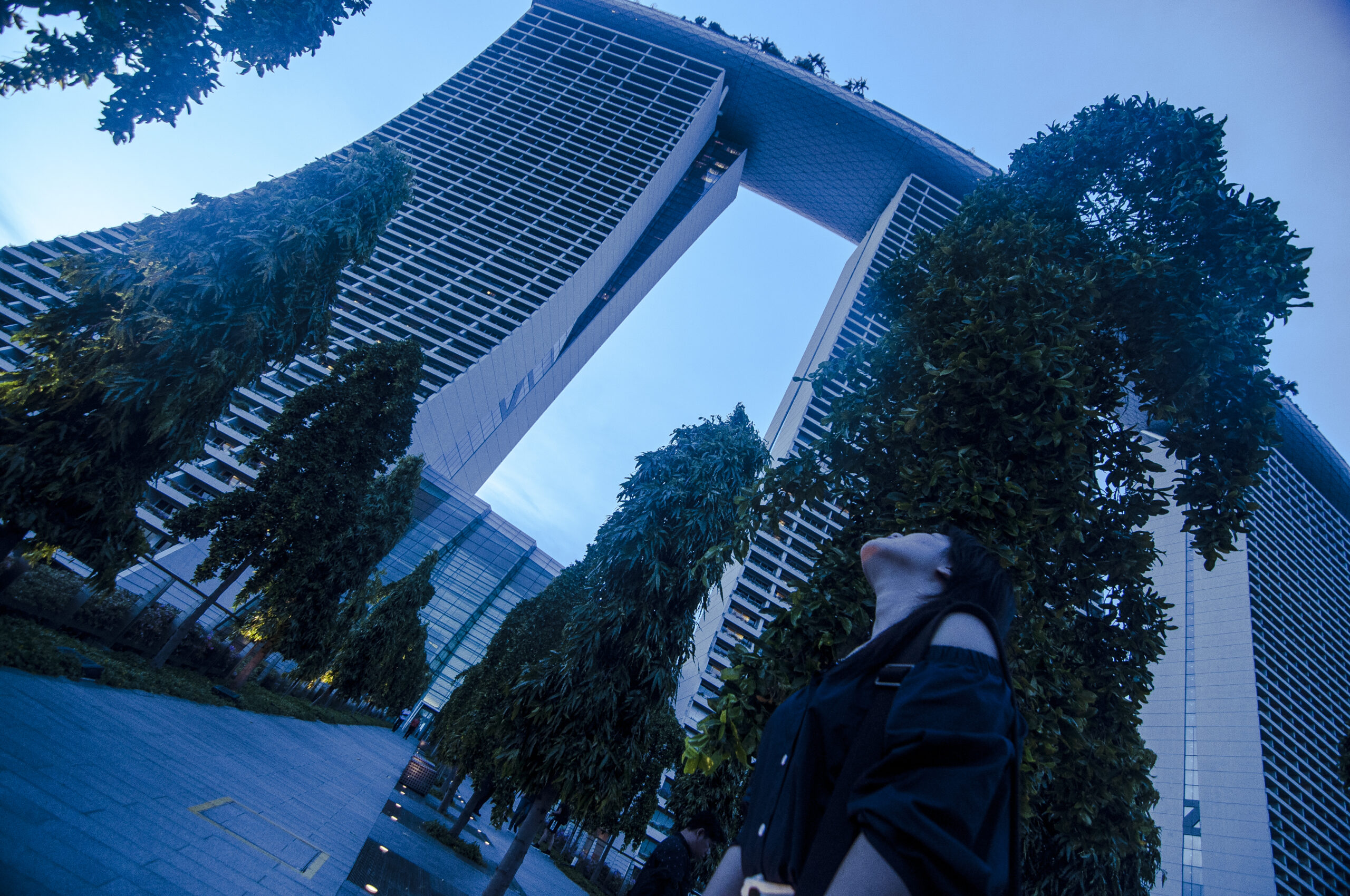
We are treated to a dramatic upward view of the hotel’s interior atrium.
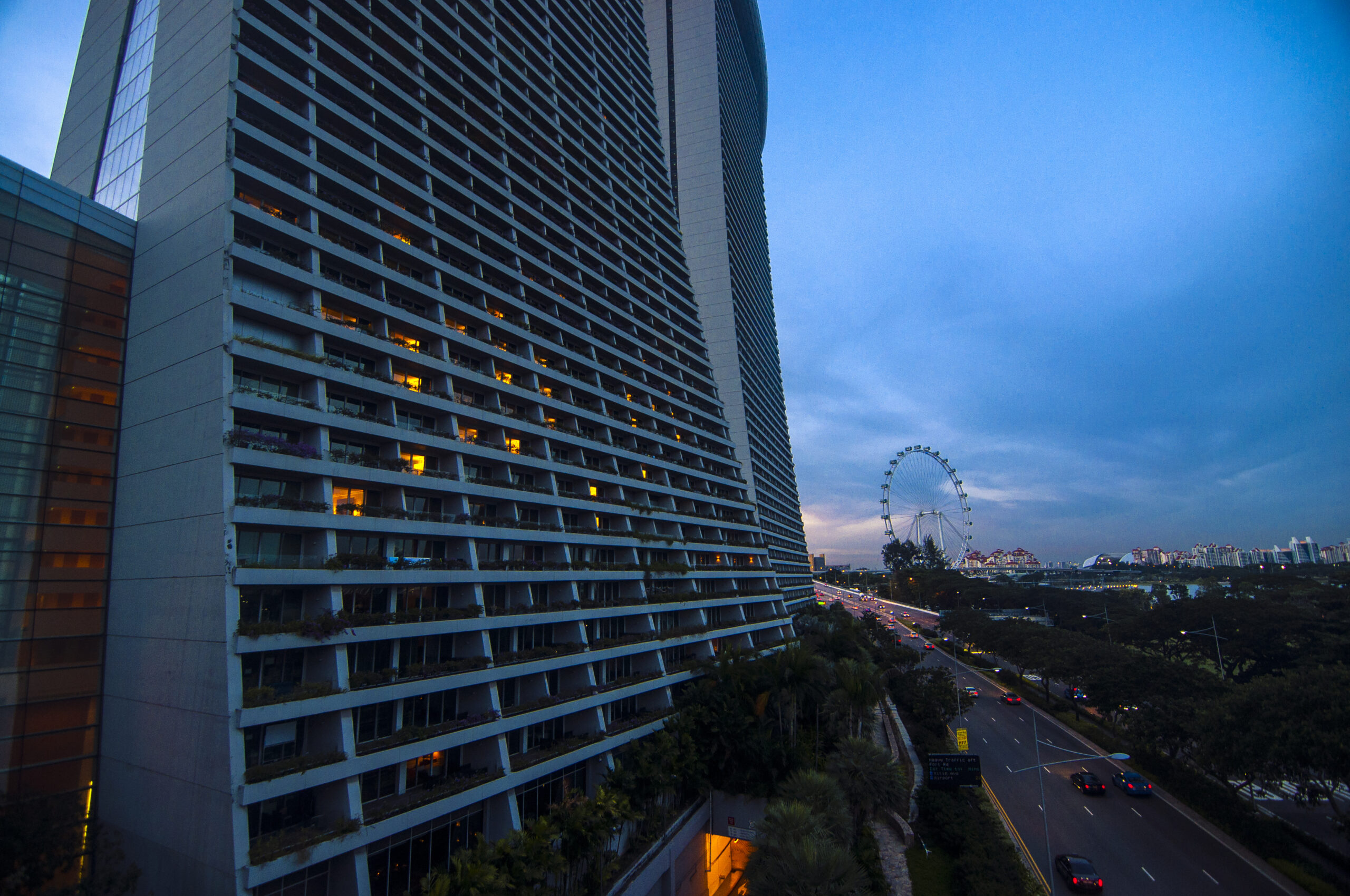
The Catenary Curve & Slant: The hotel consists of three 55-story towers. What makes them unique is their extreme slant. Tower 1, seen on the left, inclines at a massive 26-degree angle. During construction, temporary steel trusses had to hold the building up until it reached the 23rd floor, where the opposite legs connected to self-support.
The Inward View: Looking up, the internal balconies step back continuously, forming a cavernous, geometric canyon that allows natural daylight to penetrate deep into the lower lobby floors.
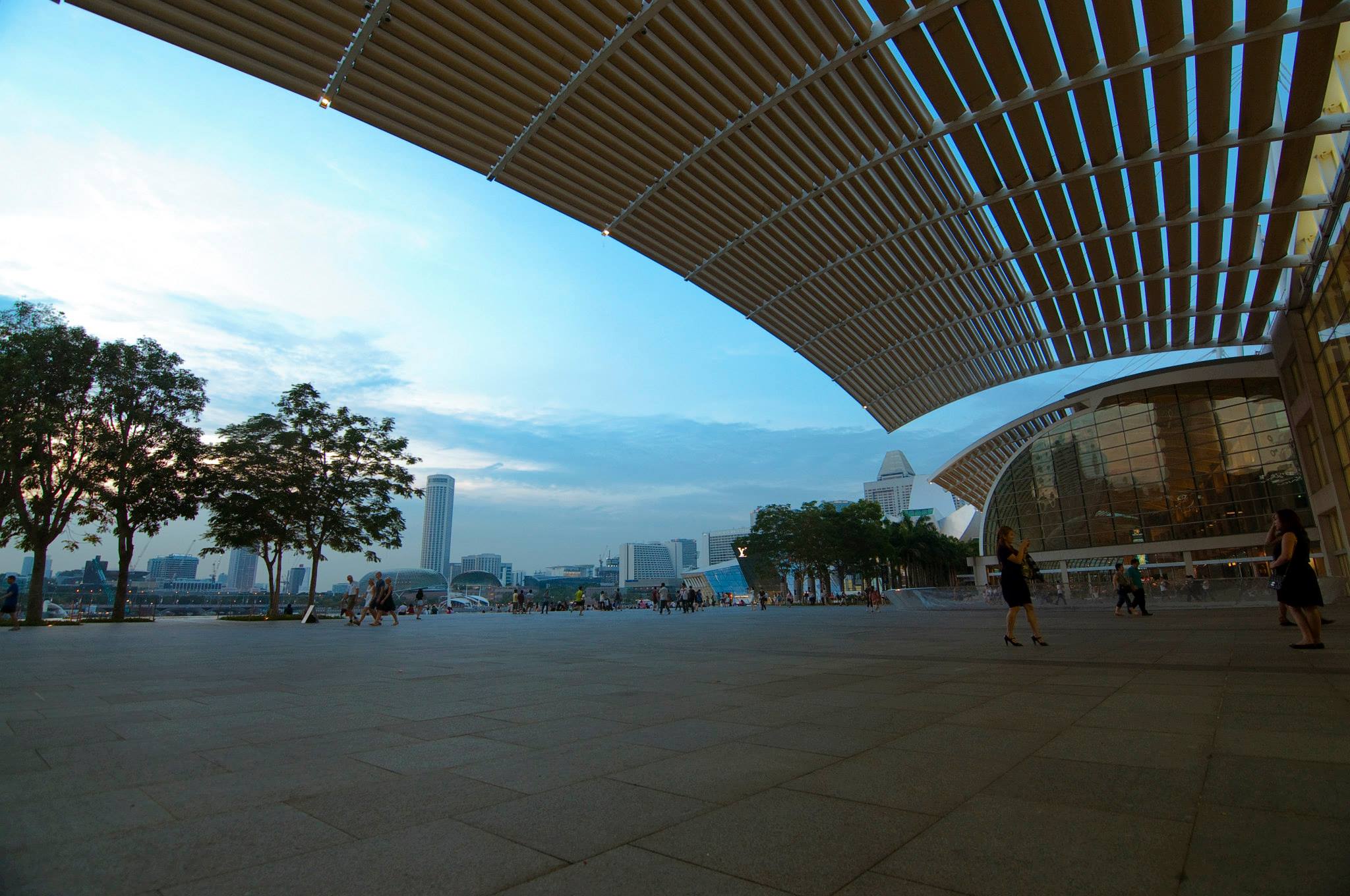
2. The Great Waterfront Promenade and Canopy
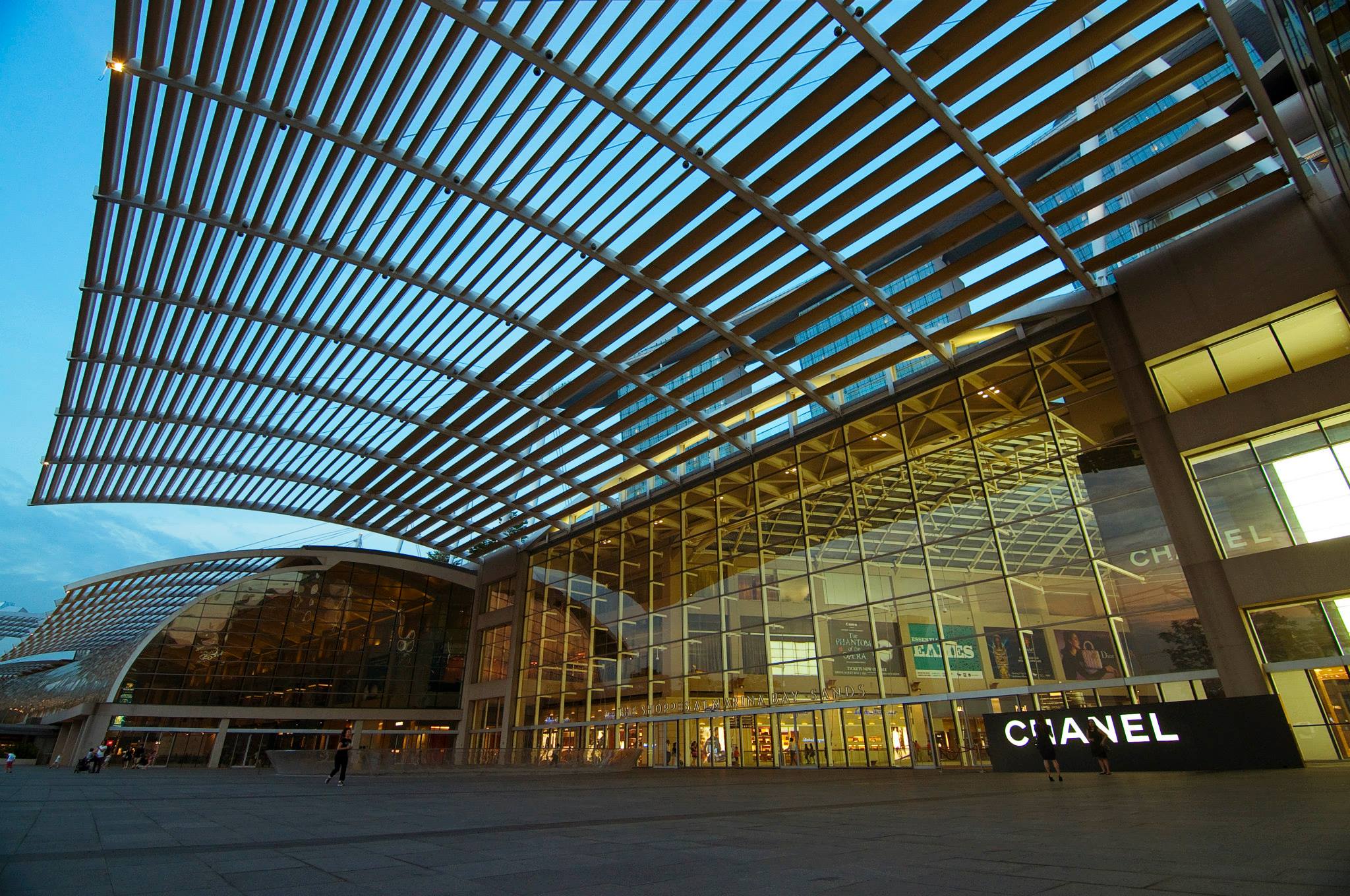
A focus on the massive outdoor plaza and the entrance to The Shoppes at Marina Bay Sands.
The Louvered Canopy: Suspended high above the plaza is a massive, curved steel louver system. This acts as a giant sunshade (brise-soleil), blocking intense tropical glare while allowing ocean breezes to sweep through the public square.
The Glass Facade: The retail and convention center features an undulating wave-like glass roof. The structural steel framing relies on catenary arches to clear massive open spans without the need for intrusive interior columns.
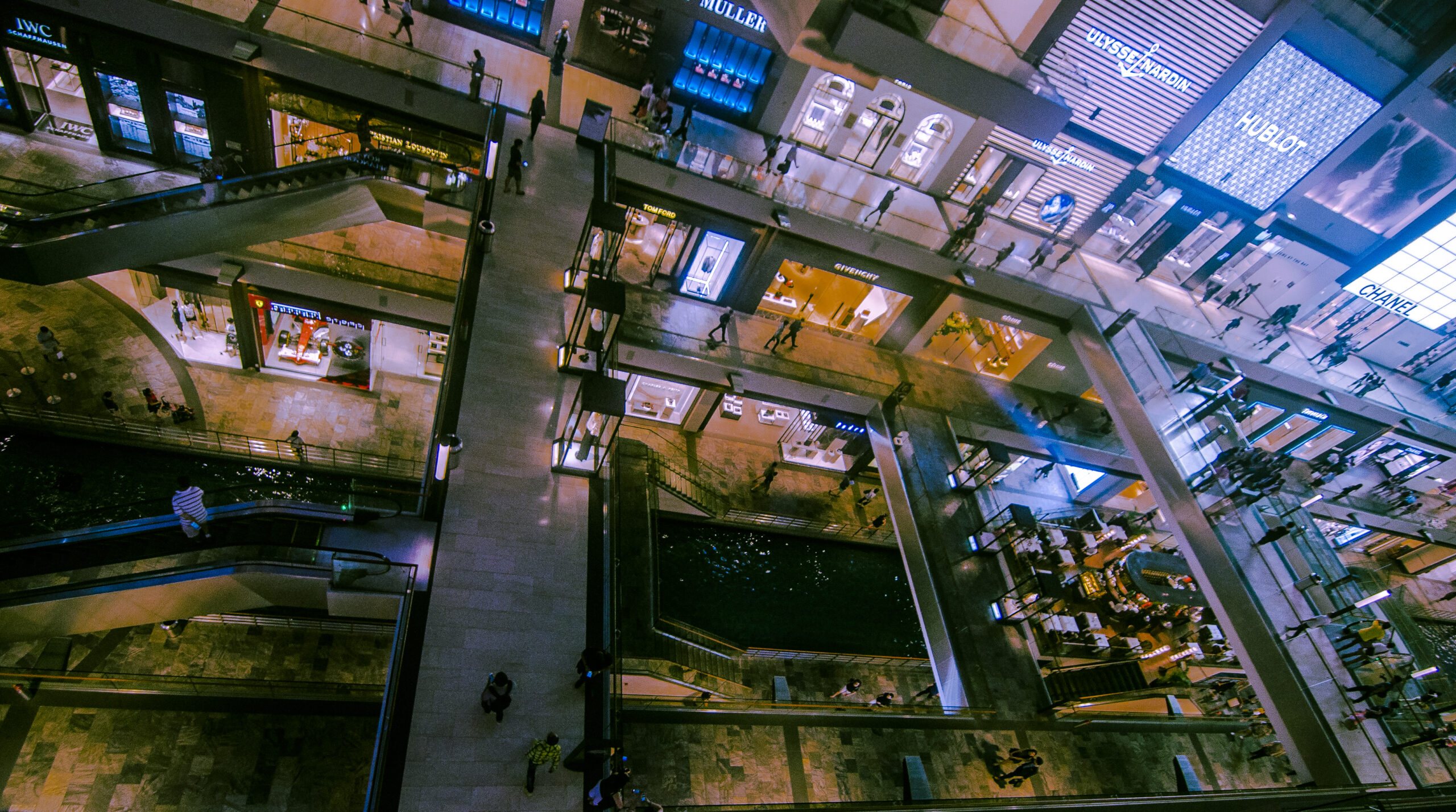
3. The Indoor High Street
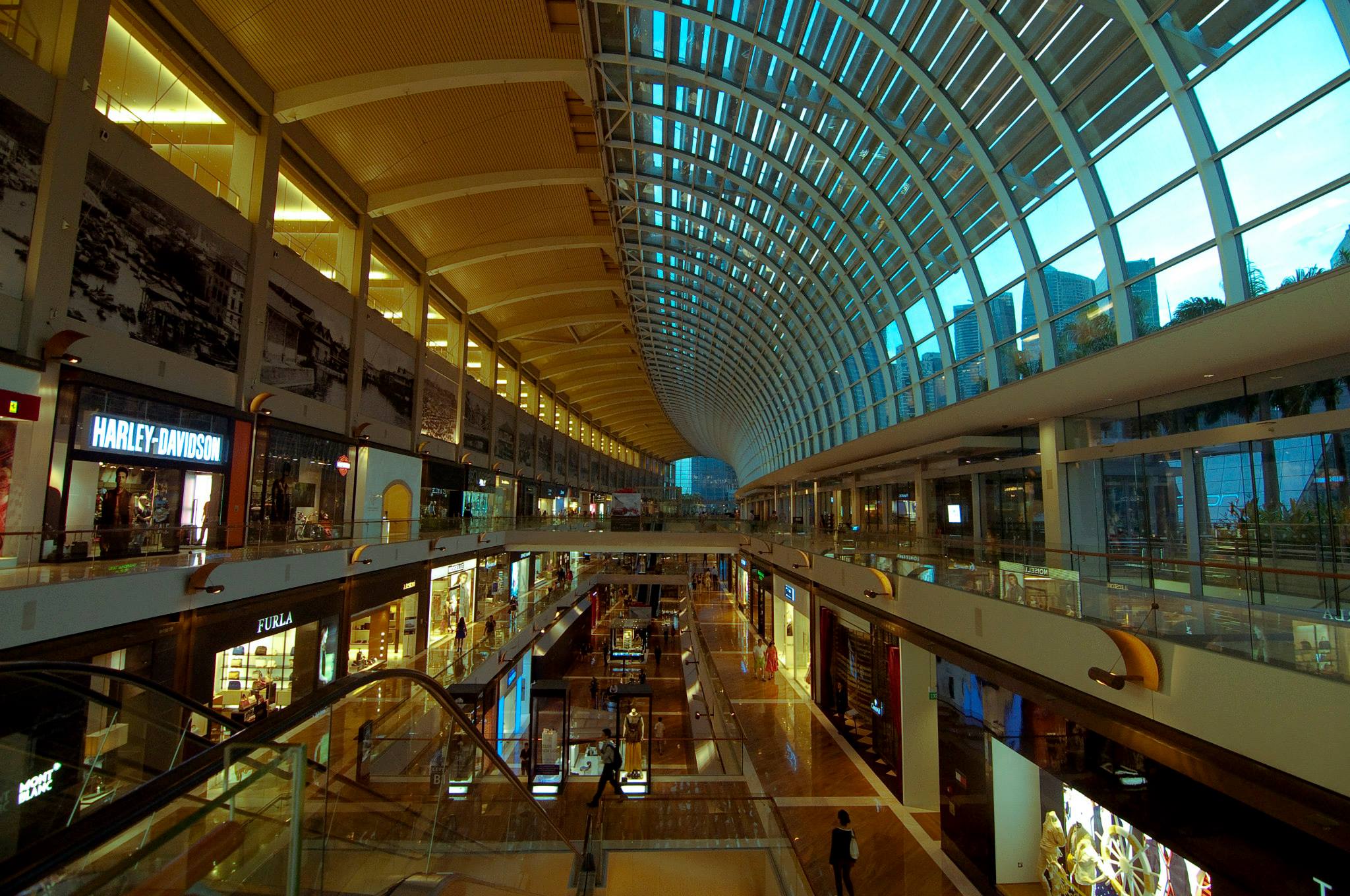
We see the interior of the retail mall.
The Barrel Vaulted Roof: A massive, glazed steel-and-glass grid wraps over the entire high-end shopping district. Safdie integrated a continuous skylight running the length of the spine, reducing the need for artificial lighting during the day.
The Urban Canal: Look closely at the lower levels, and you will spot an indoor canal where visitors can ride sampan boats—a literal nod to Singapore’s rich history as a trading port city, integrated flawlessly into a ultra-modern luxury space.
4. The SkyPark: Gravity-Defying Feat
The legendary Sands SkyPark, the 340-meter-long oasis that bridges all three towers.
The Ultimate Cantilever: The SkyPark extends 67 meters (220 feet) past the edge of Tower 3. It stands as the largest public cantilevered platform in the world.
Built for Movement: High-altitude winds cause towers of this height to sway. To keep the SkyPark from snapping, engineers didn’t bolt it rigidly across the towers. Instead, it rests on custom expansion joints that allow the three individual towers to move independently beneath the park during high winds or minor seismic shifts.
The Style: High-Tech Biophilic Regionalism
Marina Bay Sands falls under the umbrella of High-Tech Architecture mixed with Biophilic Design.
While it uses cutting-edge materials—such as high-performance double-glazed glass, post-tensioned concrete, and massive steel trusses—it fundamentally rejects the cold, sterile nature of classic industrial architecture. By heavily incorporating hanging gardens on the hotel balconies, sweeping water features, and giant indoor green spaces, the complex serves as a pioneer for Singapore’s master plan: transforming from a “Garden City” into a “City in a Garden.”
Whether you are studying its complex structural load paths or simply admiring the way the warm interior lights contrast against a deep blue Singapore twilight, Marina Bay Sands stands as an enduring monument to what happens when structural engineering pushes boundaries to serve public space.
Project Team
Architect: Moshe Safdie
Builder: Ssangyong Engineering & Construction Construction
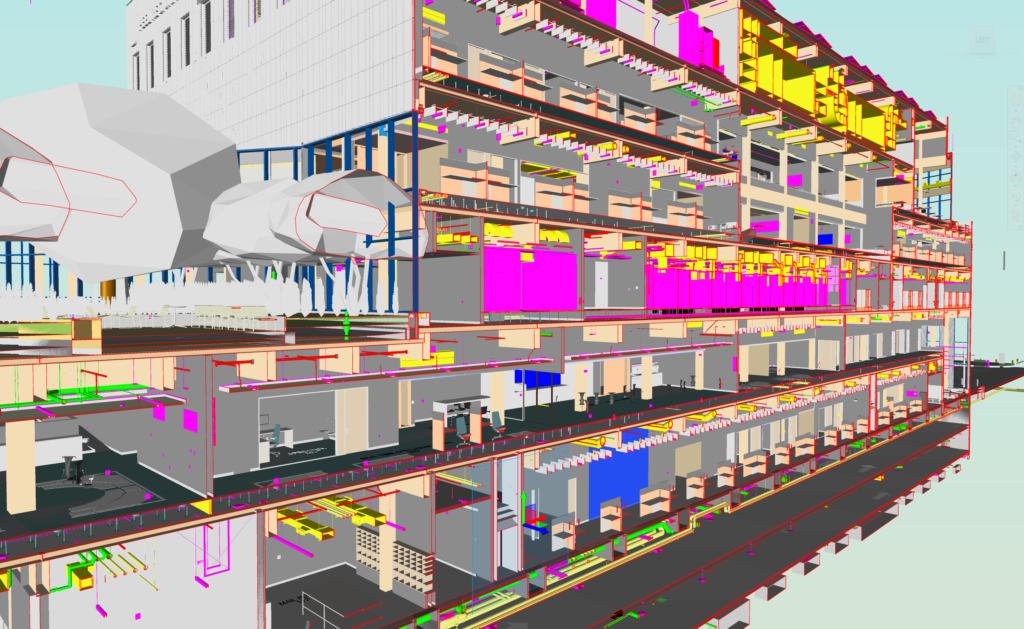
A successful electrical conduit installation begins long before construction starts on site. Through detailed BIM coordination using Autodesk Revit, clash…
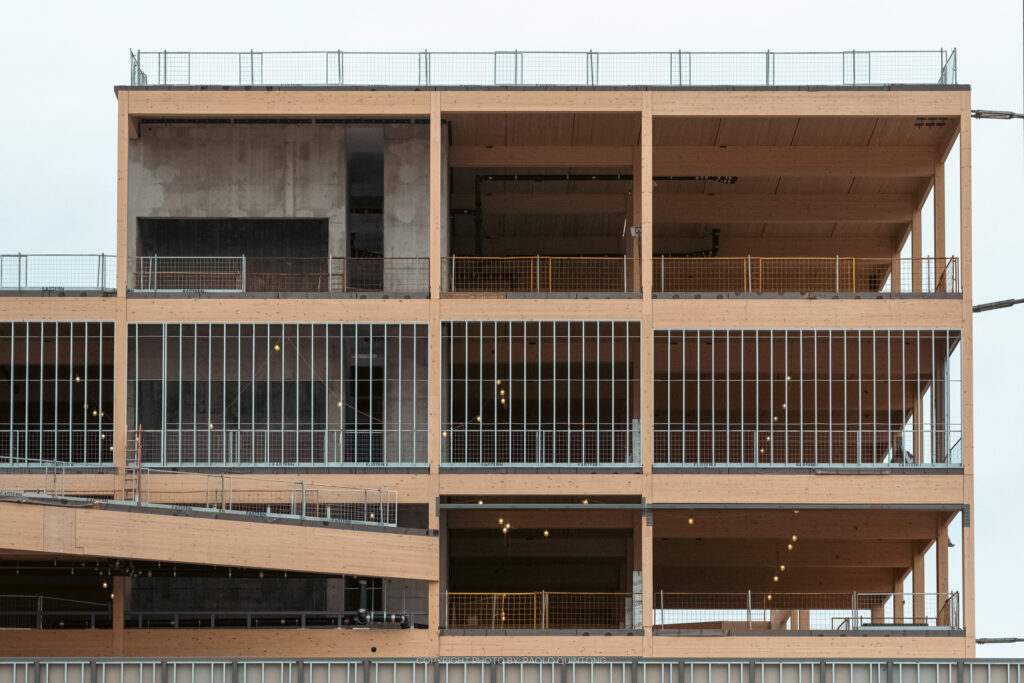
This 6-storey institutional project in Brampton highlights the growing role of mass timber construction in sustainable civic architecture. Featuring exposed…
A glimpse into BIM coordination workflows at the PRP Regional Police project under Guild Electric Ltd., featuring clash detection in…
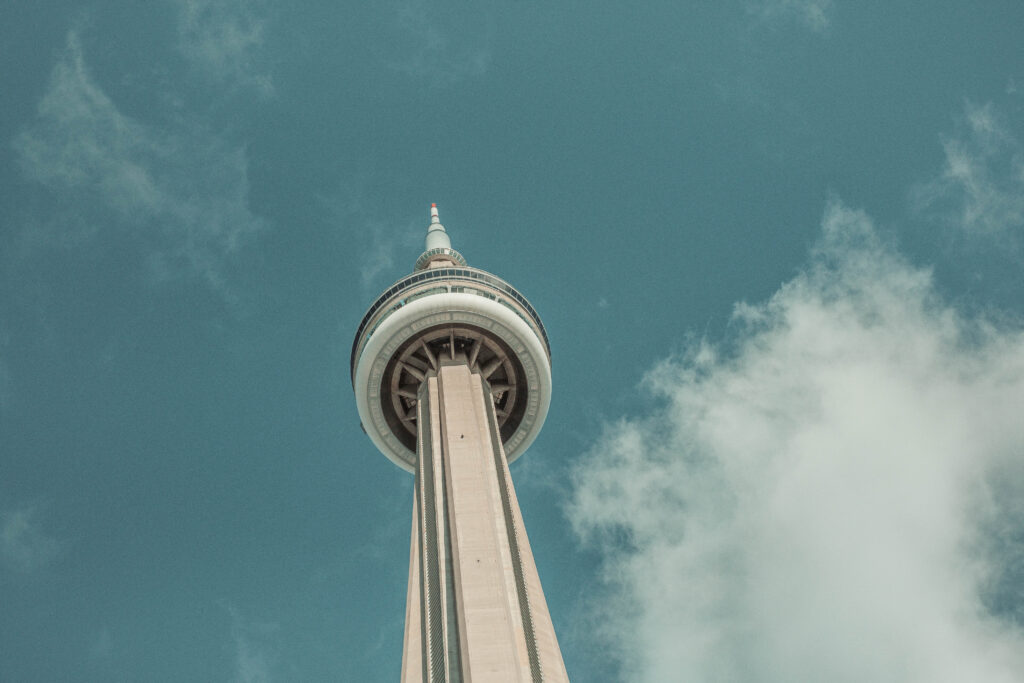
Standing beneath the towering structure of the CN Tower, the camera points upward into a vast blue sky, emphasizing the…
Further along Queen Street West, storefronts introduce bold color into the urban environment. A deep orange façade beside a dark…