SEARCH
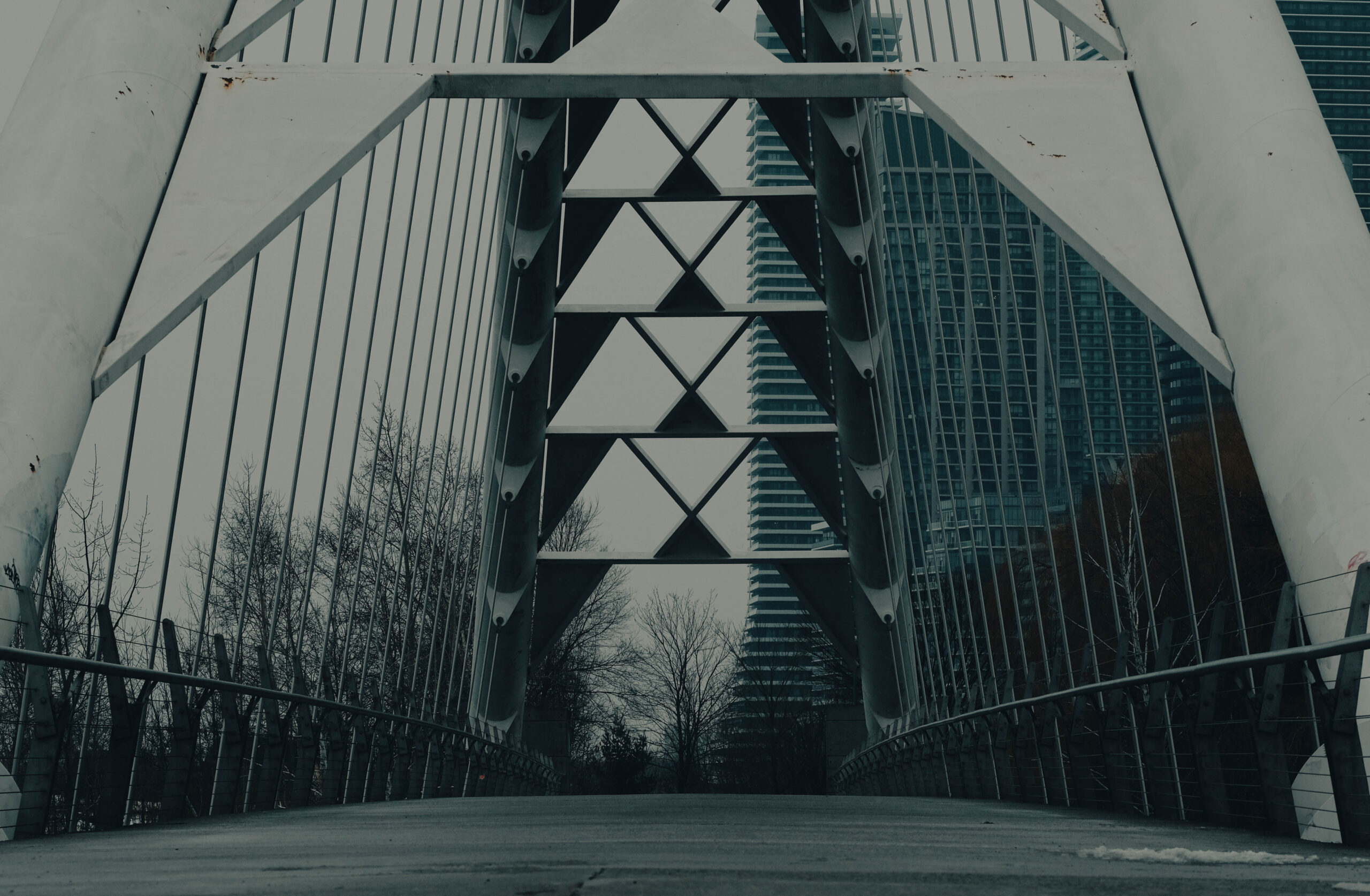
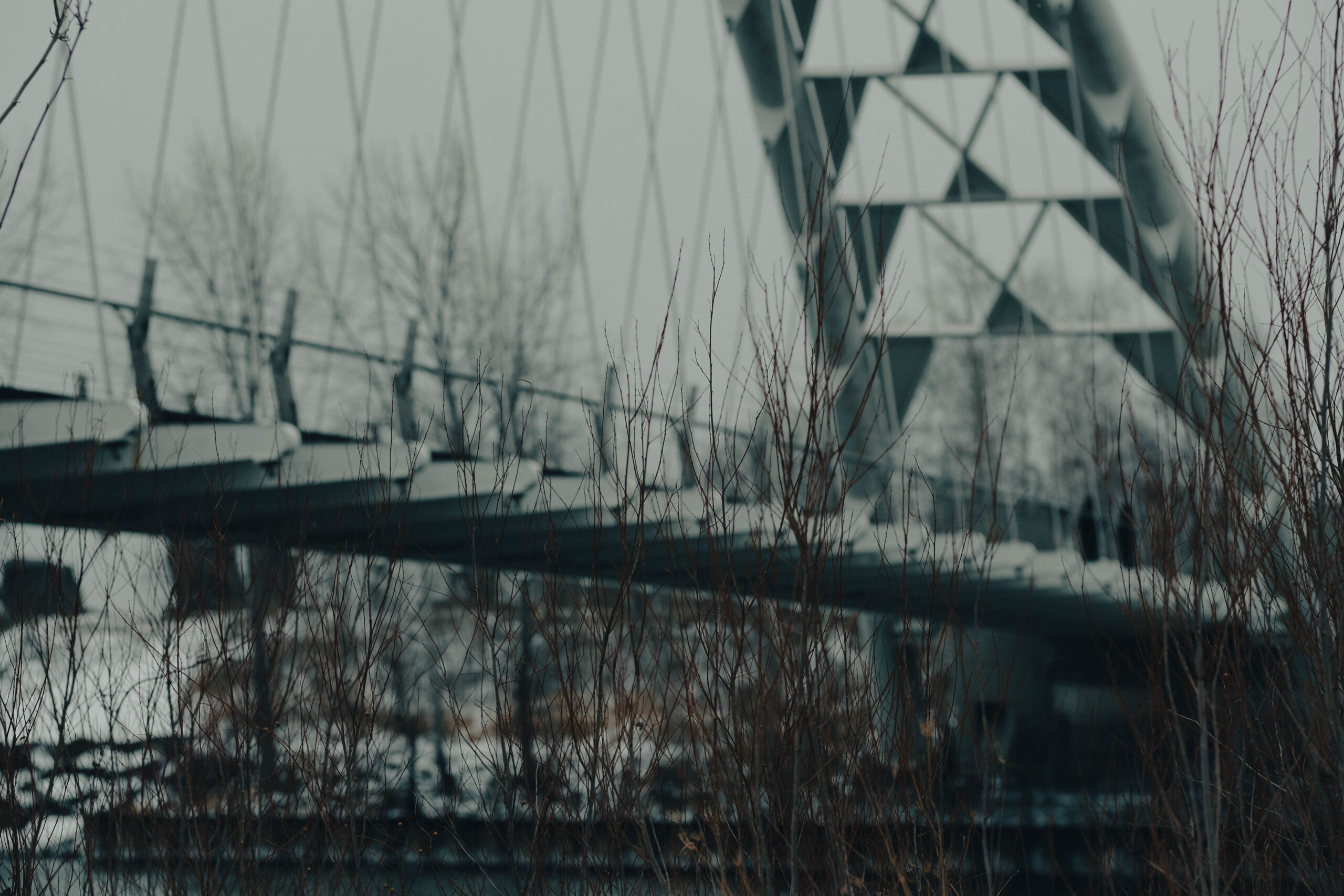
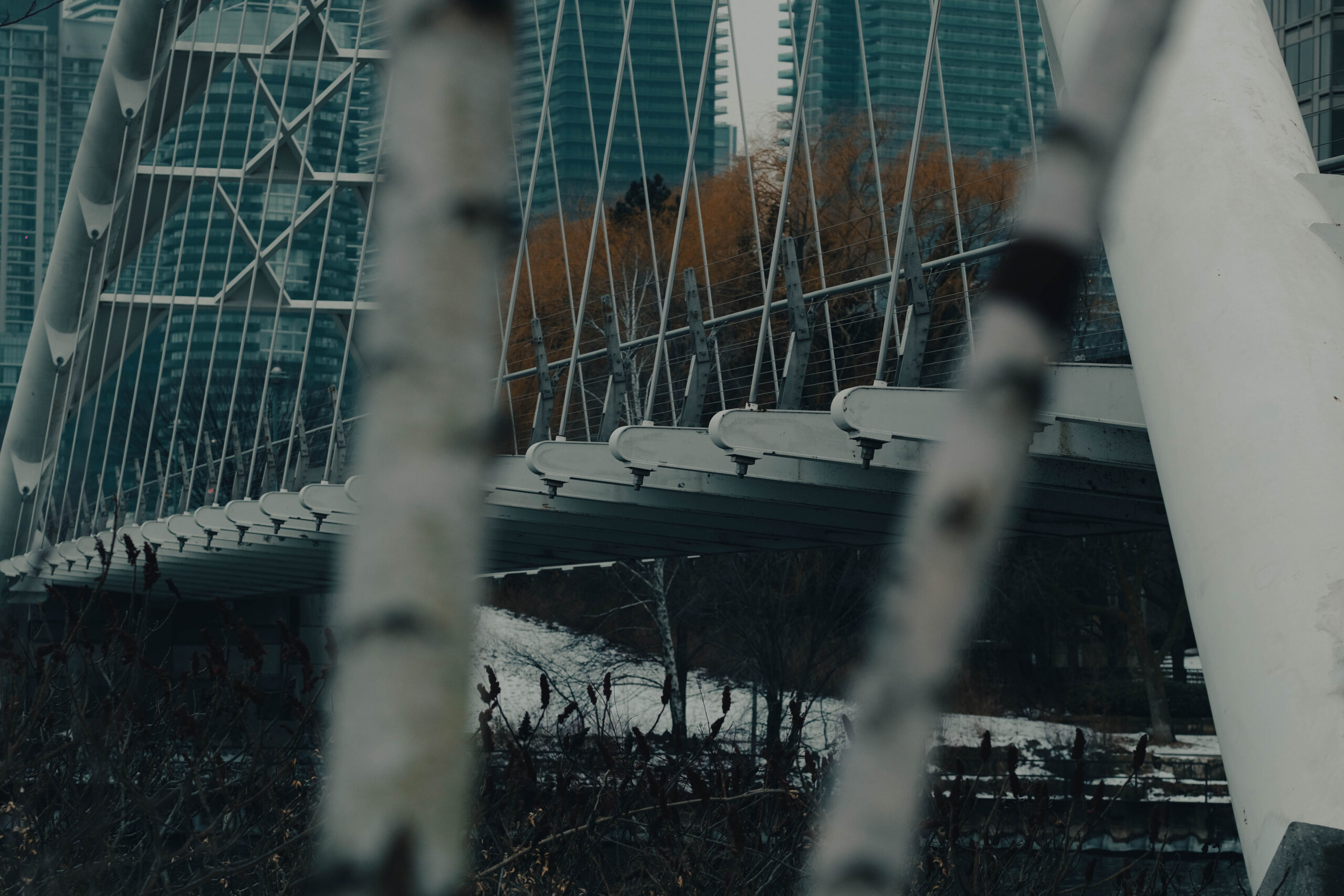
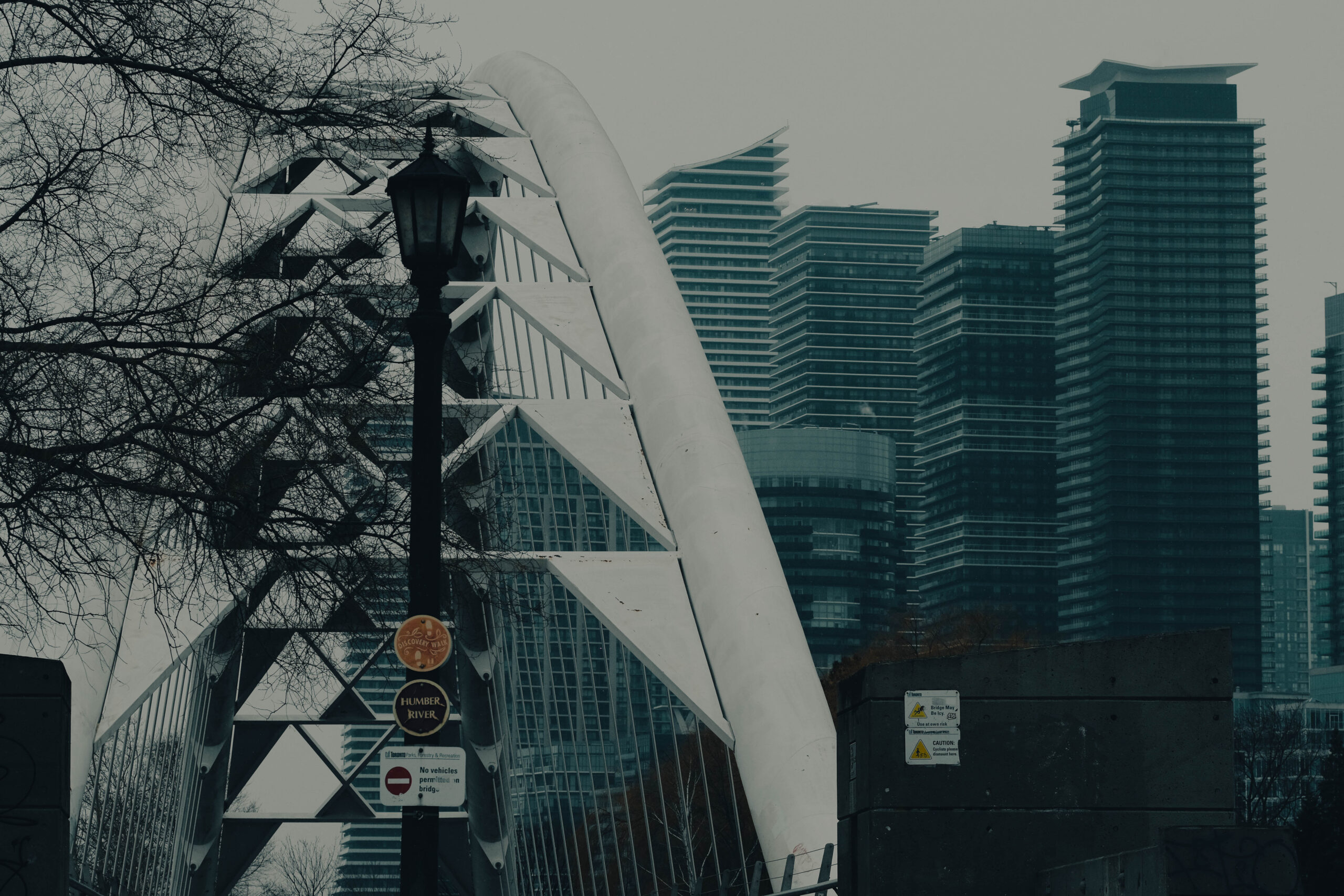
These photographs were captured along the waterfront near the Humber Bay Arch Bridge, a striking pedestrian and cycling bridge that spans the Humber River before it meets Lake Ontario. Located between Humber Bay Shores and the Martin Goodman Trail, the area offers one of the most visually compelling landscapes along Toronto’s western waterfront. The bridge itself immediately commands attention. Its sweeping white arch rises above the walkway, with tension cables forming a delicate geometric web that frames the skyline beyond. From certain angles, the structure becomes almost architectural in composition—triangular steel frames, repeating vertical cables, and the quiet rhythm of the deck leading forward. As an architect, these structural elements naturally draw the eye, turning a simple crossing into an exploration of form, balance, and proportion. Behind the bridge, the residential towers of Humber Bay Shores appear through the winter haze. Their layered balconies create horizontal bands that contrast with the bridge’s strong diagonal lines. The combination of infrastructure and residential skyline reflects a familiar Toronto urban condition—nature, engineering, and dense housing existing within the same frame. Along the lake’s edge, another scene unfolds. A line of seagulls rests quietly on the breakwater facing the open water of Lake Ontario. The composition becomes almost minimalist: a horizontal concrete line, the distant horizon, and a row of birds evenly spaced across the frame. The cold winter light softens the colors of the lake and sky, creating a calm, nearly monochromatic palette. Further details reveal the quieter stories of the place. Small padlocks attached to the bridge railing suggest personal gestures left by visitors—symbols of memory, relationships, or simply moments spent here overlooking the water. Nearby branches and winter vegetation frame the bridge structure, introducing organic textures that contrast with the clean steel lines.
A Quiet Edge of the City
Unlike the energy of downtown streets, the Humber waterfront moves at a slower pace. Cyclists pass along the trail, pedestrians stop to watch the lake, and the skyline remains just distant enough to feel separate from the city’s noise. The space becomes a threshold between urban life and the openness of the lake.
For street photography, locations like this reveal another side of Toronto—not the busy intersections or crowded sidewalks, but the quiet infrastructure that connects neighborhoods to the landscape. Here, architecture is not just buildings but bridges, trails, and waterfront edges shaping how people experience the city.
In winter, when the colors fade and the air grows still, the geometry of the place becomes even clearer. Steel frames, cables, horizons, and silhouettes stand out sharply against the muted sky, transforming a simple walk along the waterfront into a study of structure, light, and atmosphere.
Standing beneath the towering structure of the CN Tower, the camera points upward into a vast blue sky, emphasizing the…
Further along Queen Street West, storefronts introduce bold color into the urban environment. A deep orange façade beside a dark…
Toronto’s Distillery District transforms into a different kind of city space during winter. Historic red-brick industrial buildings from the 19th…
A series of photographs captured during a drive north of the Greater Toronto Area toward Tobermory, passing through the quiet…
A faceted sculpture rises confidently between two glass towers, its crystalline surfaces catching the light against a clear blue sky.…